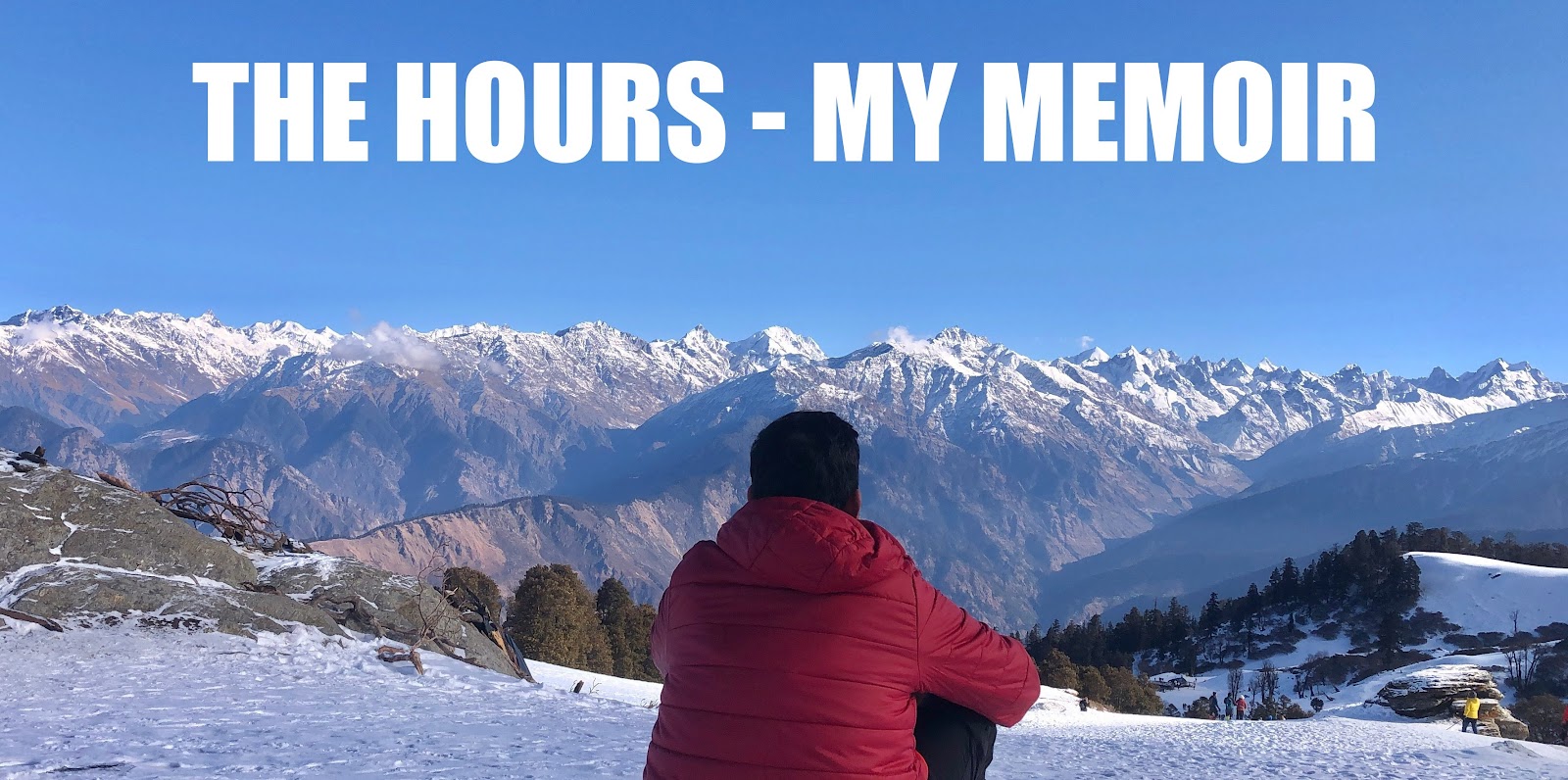
I Continue From Here: Manaslu Circuit Trek - Day 3: Deng to Namrung
Day 4: Namrung (2,630 m / 8,628 ft) to Shyala (3575m /11,730ft ) - 13km/8.5H

10-May-2026
I woke up at around 5 a.m. to watch the sunrise. Ward was there too, camera in hand. Unfortunately, the morning was cloudy, and Mt. Saula was soon hidden behind the clouds. We did, however, spot a few mountain goats on the cliffs opposite the guest house.
Later that morning, we saw a bear on the same cliff. Thanks to Ward's DSLR and zoom lens, we were able to observe its movements up close for quite some time.

While we were at the breakfast table, a loud argument broke out between one of the Israeli boys and their guide. The guide was shouting at him over a breakfast order that had a different price than what had been communicated. It seemed like a very minor issue. We wondered whether the guide's reaction stemmed from frustration with the group's overall attitude. Regardless, I felt it was inappropriate for him to scream at the boy.
As a teacher, I could not bring myself to dislike them in the way some other trekkers seemed to. Whatever our political views may be, we are all shaped by our histories, conditioning, and circumstances. As someone older and, hopefully, a little wiser, I saw no reason to judge them harshly. Most of them were only twenty-one or twenty-two years old—still very young. And hate, in any case, has never been an effective way to change people.
Later, during the day's walk, I struck up a conversation with the same boy and complimented the music he was playing. He told me it was Zen meditative music. I had also seen him playing a mouth organ the previous evening. He was clearly talented and had a genuine interest in music. Yes, at times their behaviour could seem abrupt, but as elders, we have a responsibility to guide younger people rather than condemn them. Our attitude can make all the difference and often shapes the response we receive from others.


By now, we were crossing from predominantly Hindu regions into predominantly Buddhist ones. I recalled something our guide, KP, had said the previous evening that had surprised me. "We now leave the land of violence and head towards non-violence," he had remarked. He went on to argue that Hindu mythology was largely made up of stories of conflict and killing, though he also pointed out that Buddhists in the region ate meat. I chose to remain silent and let him express his opinion.
We are often eager to debate views we disagree with, but age teaches us the value of restraint. Holding back gives us time to understand another person's perspective before judging it. On reflection, KP was not entirely wrong, and many religions carry similar contradictions. Religion is, after all, a human construct that helps form communities of shared beliefs. Once we understand that, there is little point in becoming defensive about it. It is perhaps better to create our own values and traditions—those that define our generation—rather than remain bound to ideas from the past that no longer serve us.

Many of the people living in this part of the country had migrated from Tibet during the 1960s following the Chinese invasion and occupation of Tibet. Mani walls could be seen all along the trail. These long, low walls are formed by stacking hundreds of intricately carved stone slabs, each etched with Buddhist prayers and sacred symbols. One must always pass them on the left-hand side as a mark of respect.

Along the way, we stopped to take group photographs with Ganesh Himal (7422m/24350ft) in the background. Spending thirteen days with the same group of people can either make or break a trek, so getting along was important. Ours could not have been better. Conversations flowed effortlessly, laughter was constant, and even the occasional bursts of noise only added to the fun. We bonded over games, shared stories, and genuinely enjoyed each other's company throughout the journey.


I met a middle-aged guide named Gautam Yadav, whose daughter was studying medicine in Bangalore. He told me that she spoke highly of both the city and its people. The only thing she struggled with was the food, which she found too spicy.
I could understand his daughter's struggle because I was experiencing something similar myself on this trek. By the second day, I was already growing tired of eating dal bhat for every meal. Moreover, they looked exactly the same wherever I ordered them with the green gram dal, potato sabji and boiled spinach. I began alternating between chapatis, pancakes, and momos instead. Finding wheat-based food in the mountains, however, was not easy. Even the chapatis were often made with refined flour rather than whole wheat. Oats with apple for breakfast, on the other hand, became a welcome constant—something I enjoyed every morning without complaint.
At one of our rest stops, I offered chikkis to some village children. I always carry a large supply of these special chikkis from a Rajasthani store near my house with me to distribute along the trail.


The climb before our lunch stop at Lho (2,957 m / 9,701 ft) was extremely steep and tiring. After lunch, we climbed to the terrace and caught our first glimpse of Manaslu, partially veiled by clouds.
The photographs from the trek are undoubtedly beautiful, but the experience is not always as idyllic as it is often portrayed. Some stretches of the trail were extremely demanding, especially while carrying a backpack weighing close to fifteen kilograms. Every evening, KP would carefully brief us about the next day's route and its difficulty level. Over time, I learned to decode his terminology. "Nepali flat" usually meant a gentle uphill climb, while "Nepali gradual" almost always meant steep. And if he actually described a section as "steep," I knew we were in trouble. Yet it is precisely these difficult climbs and exhausting walks that make the views at the end of the day feel so rewarding.
We then visited the monastery in Lho. KP told the group, "All the monasteries in this area will look similar, and the main idols will seem the same." He wasn't wrong. Most monasteries share a similar architectural style, with nearly identical idols and Thangka paintings adorning their walls.


Along the way, we spotted some rhododendron flowers. In this region, I only saw them in shades of light violet and bright pink. They reminded me of the Goecha La trek I had done in Sikkim, India, where I had seen many different varieties of rhododendrons in a stunning range of colours. Incidentally, rhododendron is Nepal’s national flower.
When we reached Shyala, I was completely mesmerised by the scenery. Shyala is perhaps one of the most beautiful villages on the entire trek. KP had chosen an excellent guest house with a terrace that offered unobstructed views of the surrounding peaks.


Mt. Manaslu (8,163 m / 26,781 ft) is the world's eighth-highest mountain. Its name is derived from the Sanskrit word manasa, meaning "spirit" or "intellect," and it is often referred to as the "Mountain of the Spirit."
Flanking Manaslu on either side were Himalchuli (7893m/25896ft), Ngadi Chuli (7871m/25823ft), and Naike Peak (6211m/20377ft), creating an impressive panorama.

After freshening up, we headed to the terrace and spent a long time admiring the spectacular mountain views. I tried doing a little sketching, but the cold wind gradually made it difficult to continue.
That night, I had a chocolate pancake for dinner because none of the other options appealed to me. We also ordered a spring roll for the table. It looked more like a giant empanada than a spring roll. Inside, however, it was filled with vegetables and noodles. It was nothing like the spring rolls of Southeast Asia.

To Be Continued...

Comments
Post a Comment
Your thoughts are valuable and encouraging! So, please leave back a comment.